
 DCTC KSA
- Blogs
- / Robotics in Construction Saudi Arabia: The 2026 Innovation Roadmap
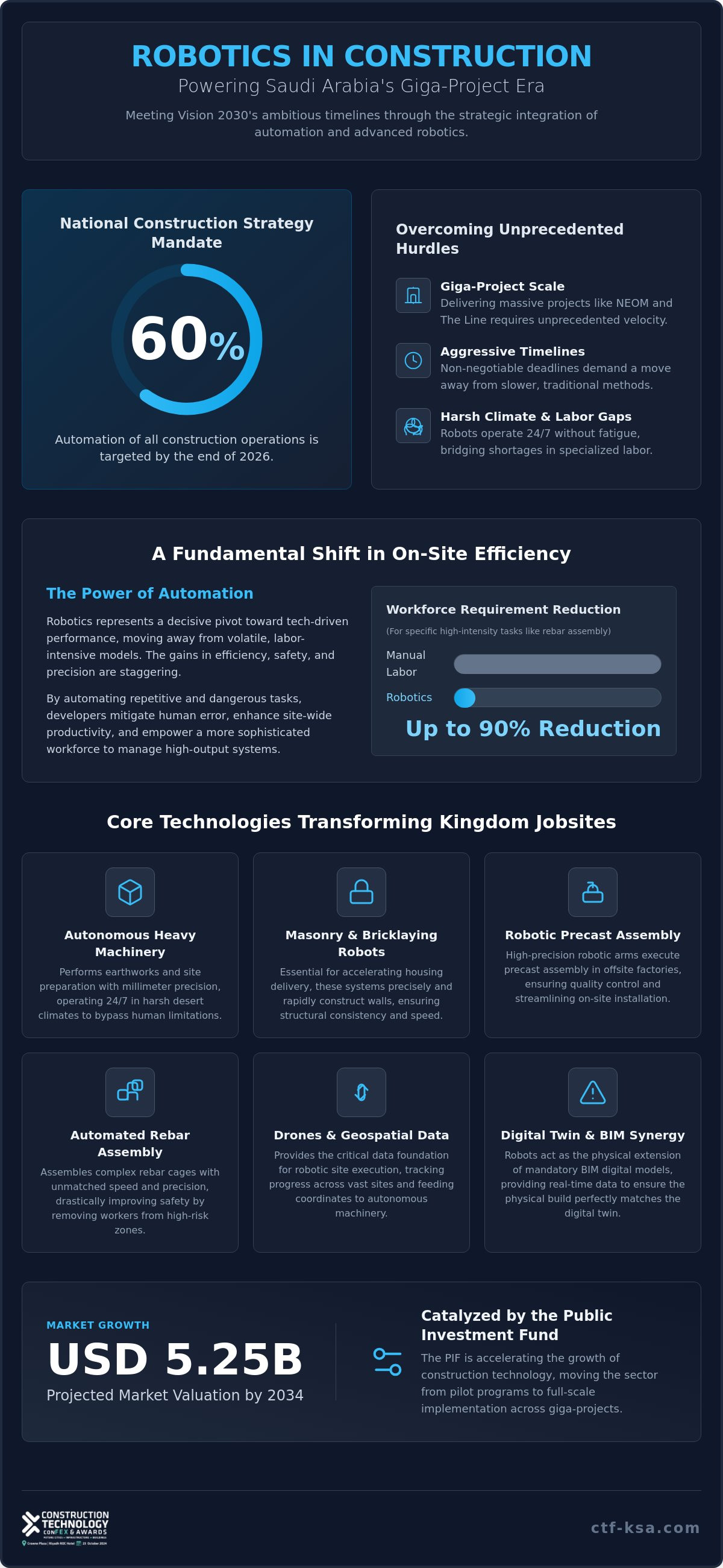
Saudi Arabia has set a definitive mandate: by the end of 2026, the National Construction Strategy targets the automation of 60% of all construction operations. This isn't a distant ambition; it's a structural requirement for the Kingdom's rapid evolution. Delivering giga-projects like NEOM and The Line within aggressive timelines while navigating extreme desert climates and specialized labor shortages is a monumental task. You understand that traditional manual processes are no longer sufficient to meet the scale of Vision 2030. Integrating robotics in construction Saudi Arabia is now the only viable path to maintain momentum and ensure workplace safety.
Discover how the latest advancements in automation are essential to delivering your projects on time and within the updated 2026 Saudi Building Code framework. We'll examine the specific robotic technologies providing immediate ROI, from 3D-printed concrete to autonomous layout systems. You'll gain the insights needed to identify elite partners and implement automation at a scale that secures your position at the forefront of the Kingdom's industrial transformation.
Key Takeaways
- Understand why traditional construction methods are insufficient for the scale of Vision 2030 and how automation ensures aggressive delivery timelines.
- Identify the specific autonomous heavy machinery and masonry robots currently accelerating site preparation and housing delivery across the Kingdom.
- Align your operational roadmap with the National Industrial Strategy to capitalize on the rapid expansion of robotics in construction Saudi Arabia.
- Discover how the Public Investment Fund (PIF) is catalyzing the growth of construction technology to move from pilot programs to full-scale implementation.
- Learn how to bridge the gap between global technology providers and project owners through high-level networking and strategic industry partnerships.
The Imperative for Robotics in Saudi Arabia’s Giga-Project Era
The scale of Saudi Arabia’s infrastructure ambitions is unprecedented. The deadlines are non-negotiable. Traditional construction methods, reliant on massive manual labor forces, simply cannot sustain the velocity required for projects like NEOM or The Red Sea. Construction automation represents a fundamental shift; it is the strategic integration of semi-autonomous and fully autonomous systems directly into the physical jobsite. This transition is no longer optional. To meet the National Construction Strategy's 2026 goals, the adoption of robotics in construction Saudi Arabia must move from the periphery to the core of every major development.
We are witnessing a decisive pivot toward tech-driven performance. The objective is clear: deliver giga-projects on time and on budget without compromising quality. By leveraging Core Robotics Technologies, developers can move away from volatile, labor-intensive models. The efficiency gains are staggering. For example, robotics reduces onsite workforce requirements by up to 90% in specific, high-intensity tasks like rebar assembly. This level of optimization is the only way to manage the sheer volume of work currently underway across the Kingdom. Companies looking to lead this transition can explore sponsorship opportunities to align their brand with the Kingdom's technological elite.
Overcoming the Labor and Efficiency Gap
Specialized labor shortages represent a critical bottleneck for giga-project timelines. As the demand for niche expertise outstrips global supply, automation steps in to bridge the gap. Machines don't suffer from fatigue in the harsh desert heat. They don't lose precision over twelve-hour shifts. By automating repetitive and dangerous tasks, developers mitigate human error and drastically enhance site-wide productivity. This isn't about replacing workers; it's about empowering a more sophisticated workforce to manage high-output systems that guarantee project success in a competitive regional market.
Core Robotics Technologies Transforming the Kingdom’s Jobsites
The deployment of robotics in construction Saudi Arabia has evolved from experimental pilots to mission-critical infrastructure. This shift is reflected in the numbers. According to recent Saudi construction robotics market trends, the sector is projected to reach a valuation of USD 5,254.4 million by 2034. This massive investment fuels the rise of autonomous heavy machinery capable of performing earthworks and site preparation with millimeter precision across expansive desert terrains. These systems operate 24/7, bypassing the limitations of human endurance in harsh climates.
Innovation extends into the vertical structure of the Kingdom's new cities. Masonry and bricklaying robots are now essential for accelerating housing delivery, while robotic arms execute high-precision precast assembly in offsite factories to ensure structural consistency. A critical differentiator in 2026 is the synergy between robotics and Digital Twins. With Building Information Modeling (BIM) now mandatory for Saudi construction firms, robotic systems act as the physical extension of the digital model. They provide real-time data for asset management, ensuring that the physical build matches the digital twin exactly. Industry leaders seeking to source these solutions can register as a delegate to connect with global tech providers.
Rebar Automation and Structural Robotics
Localization of rebar cage production is a strategic priority for giga-projects. Automated systems, such as those utilized in NEOM through partnerships with GMT Robotics, assemble complex rebar structures with speed that manual teams can't match. This transition provides a massive safety advantage. By removing workers from high-risk structural assembly zones, developers significantly reduce the potential for onsite accidents while maintaining a relentless pace of construction.
Drones and Geospatial Monitoring
Drones provide the indispensable data foundation for robotic site execution. These aerial systems utilize automated geospatial monitoring to track progress across sprawling sites, feeding accurate coordinates directly to autonomous machinery. This closed-loop system allows project owners to monitor every phase of development with total transparency, ensuring that milestones are met with surgical accuracy.
Strategic Integration: Aligning Robotics with Saudi Vision 2030
Vision 2030 isn't just a strategic framework; it's a total structural transformation of the built environment. Robotics serves as the primary engine for this evolution. The Public Investment Fund (PIF) acts as the central catalyst, channeling massive capital into the ConTech ecosystem to ensure the Kingdom becomes a global hub for high-tech deployment rather than just a consumer. By integrating robotics in construction Saudi Arabia, project owners directly align with the National Construction Strategy's mandate to automate 60% of all operations by the end of 2026. This shift isn't merely about speed. It's about achieving the economic diversification and industrial dominance required for a post-oil future.
Sustainability and precision are now legally mandated through the 2026 updates to the Saudi Building Code. In May 2026, new technical regulations for 3D-printed concrete were integrated into the code, providing a clear regulatory pathway for robotic housing delivery. These "Green Building" goals are met through robotic precision, which eliminates the material waste common in manual processes. This efficiency is further amplified by modular and prefabricated excellence. By shifting high-stakes structural assembly to controlled offsite environments, developers create a seamless pipeline for robotic site assembly. Innovators ready to lead this transition can secure a sponsorship package to showcase their systems to the Kingdom's most influential decision-makers.
The Role of the National Industrial Strategy
AEC firms must recognize that localizing advanced construction technologies is a national priority. The National Industrial Strategy offers significant incentives for firms that manufacture or implement robotic components domestically. By leveraging these government-backed innovation platforms, companies gain a decisive competitive edge. You aren't just building structures; you're participating in a state-backed industrial movement that prioritizes tech-driven performance and long-term asset value across all giga-project sites.
The Road to Implementation: Connecting with Global Innovators
Scaling robotics in construction Saudi Arabia requires moving beyond the "proof of concept" phase. While pilot programs demonstrate potential, full-scale site implementation across giga-projects presents unique operational challenges. Integration with existing workflows, environmental resilience in extreme heat, and onsite technical support are critical hurdles. You need more than just hardware; you need a comprehensive deployment strategy that aligns with the Kingdom's rapid development pace. It's about ensuring these systems don't just work in a lab but thrive in the dust and heat of a massive jobsite.
High-level networking is the essential bridge between global tech innovators and Saudi project owners. To de-risk massive capital investments, contractors must see these systems in action. Technical demonstrations provide the tangible proof required to validate performance claims before signing multi-million dollar contracts. We recommend attending the Construction Technology ConFeX KSA to witness live robotic demos and evaluate the systems designed to dominate the 2026 landscape.
Networking at Construction Technology ConFeX KSA: From Theory to Contract
Success in the Saudi market depends on access to the right decision-makers. Construction Technology ConFeX KSA facilitates direct, high-intent meetings between technology buyers and providers. With 80% of attendees being clients and end-users, the platform ensures your solutions reach those with the authority to implement them at scale. It's an environment built for conversion; 87% of exhibitors develop tangible business opportunities onsite. This is where the roadmap for 2026 becomes a reality through signed contracts and strategic alliances.
Thought leadership plays a vital role in this ecosystem. Speaking slots allow innovators to showcase successful robotic case studies, positioning their brand as an authoritative partner in the Kingdom's transformation. You're not just selling a product; you're providing a solution to a national challenge. For tech providers looking to maximize their impact, exploring sponsorship opportunities is the most direct path to gaining elite brand visibility among the Kingdom's industrial titans.
Leading the 2026 Automation Frontier
The transition toward robotics in construction Saudi Arabia is no longer a strategic option; it's a structural necessity for the Kingdom’s industrial dominance. From autonomous heavy machinery to the regulatory integration of 3D-printed concrete, the roadmap for 2026 is clear. You've seen how these technologies bridge the labor gap and ensure giga-projects remain on schedule. Success in this landscape requires more than just awareness. It demands active participation in the ecosystem where these technologies are vetted and deployed.
Realizing this vision requires direct access to the innovators and institutional players shaping the landscape. With strategic support from the Public Investment Fund (PIF), Construction Technology ConFeX KSA provides an exclusive gateway to senior decision-makers from NEOM and Red Sea Global. Data shows that 87% of exhibitors develop tangible business opportunities onsite, making this the definitive platform for high-stakes networking and procurement. Secure your delegate pass for the next Construction Technology ConFeX KSA to lead the Kingdom's next era of innovation. The opportunity to define the future of global construction starts here.
Frequently Asked Questions
How is robotics currently being used in Saudi Arabia’s giga-projects?
Robotics are currently deployed for mission-critical tasks across NEOM and The Line to maintain aggressive delivery schedules. These applications include autonomous earthworks for site preparation and robotic rebar cage assembly to accelerate structural foundations. By utilizing robotics in construction Saudi Arabia, developers can maintain a 24/7 operational cycle that isn't limited by human endurance or extreme environmental conditions.
What are the main benefits of construction automation for Saudi contractors?
The primary benefits are increased delivery predictability and strict compliance with the National Construction Strategy's 60% automation goal for 2026. Contractors gain a significant competitive edge by reducing material waste and human error, which directly improves project ROI. Automation also allows firms to scale their operations rapidly without being constrained by the current global shortage of specialized manual labor.
Is there government support for adopting robotics in the Saudi construction sector?
Yes, the Saudi government provides extensive support through the Standard Incentives Program and strategic backing from the Public Investment Fund (PIF). These initiatives offer financial incentives, including project financing for up to 75% of capital costs and salary subsidies for technical roles. This institutional support is designed to localize high-tech manufacturing and establish the Kingdom as a global hub for construction innovation.
How does robotics integration affect workplace safety on Saudi jobsites?
Robotics integration drastically improves workplace safety by removing personnel from high-risk structural zones and hazardous environments. Automated systems handle heavy lifting and repetitive tasks that often lead to physical fatigue or injury. By deploying robots in extreme desert heat, firms protect their workforce from environmental risks while maintaining the high-precision performance required for giga-project standards.
Where can I see live demonstrations of construction robotics in Saudi Arabia?
Construction Technology ConFeX KSA serves as the Kingdom’s premier platform for witnessing live robotic demonstrations in a professional environment. As the leading ConTech ecosystem, it connects technology buyers with global providers to showcase the latest autonomous systems. It's the essential gateway for sourcing automation solutions and networking with the senior decision-makers shaping the future of the Saudi construction landscape.