
 DCTC KSA

- Blogs
- / Post-event lead nurturing strategy for construction leads
The event ends; the lead journey doesn’t. A practical post-event lead nurturing strategy for construction starts with a prompt, personal follow-up: send a thank-you and relevant event highlights within 24-48 hours, then continue with useful content, invitations, and a clear next step. The aim is to turn a promising conversation into an ongoing relationship, not to push every attendee towards an immediate decision.
Following up takes coordination, especially when attendees have different roles, project priorities, and levels of interest. Learn how to plan thank-you emails, invitations, surveys, and lead nurturing around what people engaged with at your event. We’ll also cover audience segmentation, a practical communication cadence, and ways to keep messages useful rather than overwhelming. From the first follow-up to longer-term engagement, make each interaction relevant and move the conversation forward.
Key Takeaways
- Group attendees by role, interests, and readiness so each follow-up speaks to their priorities.
- Use invitations and relevant resources to give interested prospects a clear next step.
- Ask focused survey questions to learn which sessions and topics mattered most to attendees.
- Track engagement and adapt your nurturing sequence to the complexity of construction decisions.
1. What is post-event engagement?
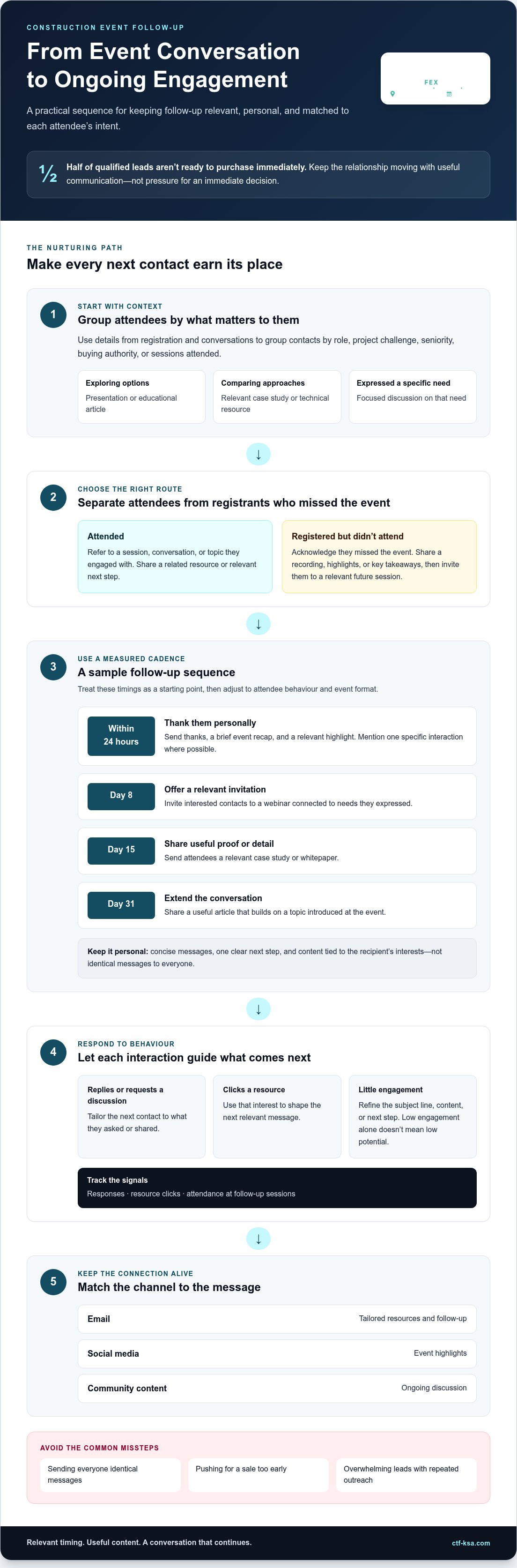
Post-event engagement is the planned follow-up that keeps conversations moving after an event. It connects attendee interactions with relevant next steps, rather than treating every contact as sales-ready. Half of qualified leads aren’t ready to purchase immediately, so continued, useful communication matters.
Start by segmenting contacts using details collected during registration and conversations. Group them by role, project challenge, seniority, buying authority, or sessions attended. Then tailor follow-ups to their interests: a project decision-maker may value technical detail, while someone exploring digital transformation may prefer an introductory resource.
Match each message to the lead’s buying stage. Someone exploring options might receive a presentation or educational article; a prospect comparing approaches could benefit from a relevant case study or technical resource. For a contact who has expressed a specific need, suggest a focused discussion. This keeps the next step aligned with the person’s intent.
Low engagement doesn’t necessarily mean low potential. Rather than dropping a quiet contact because of a low lead score, offer useful material such as an infographic, presentation, or article. For example, share a session recap with someone who attended but hasn’t replied. Keep the content relevant, then use their response to guide future communication.
Keep the event connection alive with a deliberate sequence. Within one week, send a message tied to a session or conversation. At two weeks, share special content or an invitation to a future event. At one month, offer a community invitation, newsletter subscription, or related webinar.
Use email for tailored resources, social media for event highlights, and specialized industry platforms such as Constructology 101 to share community content and encourage ongoing discussion. Track responses, resource clicks, and attendance at follow-up sessions. Common mistakes include sending identical messages to everyone, pushing for a sale too early, and overwhelming leads with repeated outreach. A post-event lead nurturing strategy for construction works best when timing, content, and channel reflect each lead’s interests.
2. Thank-you emails and follow-up invitations
Send the first thank-you email within 24 hours when possible, while event conversations remain fresh. Thank attendees, recap a key highlight, and mention one specific interaction. For example, refer to a discussion about project planning or a session on construction technology. A personal detail makes the message feel connected, not like a generic campaign.
Segment recipients before sending a message. An attendee who asked about a technical topic should receive a related presentation or resource. A prospect who discussed project priorities may appreciate an invitation to a focused conversation. Keep emails concise, with one clear next step. This supports engagement and builds relationships without turning every message into a sales pitch.
Use a simple schedule as a starting point, then adjust it to attendee behaviour and the event format:
- Within 24 hours: Send thanks, a brief event recap, and a relevant highlight.
- Day 8: Invite interested contacts to a webinar connected to their expressed needs.
- Day 15: Send attendees a thank-you and a relevant case study or whitepaper.
- Day 31: Share a useful article that extends a topic introduced at the event.
Treat these timings as an example, not a reason to contact everyone in the same way. Use an email platform to coordinate campaigns and prevent duplicate messages. If someone replies, clicks a resource, or requests a discussion, tailor the next contact to that action.
Registered attendees who didn’t attend need a different follow-up. Acknowledge that they missed the event, then share a recording, highlights, or key takeaways. Invite them to a relevant future session rather than sending a recap that assumes they were there. Make the invitation specific by naming the topic and explaining its relevance to their construction interests.
Review replies and link clicks after each send. If a message gets little engagement, refine its subject line, content, or call to action before the next campaign. A consistent, relevant cadence keeps the conversation open without overwhelming prospects.
3. Post-event surveys and feedback
A post-event survey turns attendee impressions into practical actions for the next event. Send a brief first survey within 24 hours, then share a fuller survey link 2-3 days after the event. This staged approach captures immediate reactions while giving attendees time to consider sessions, speakers, and the overall experience.
Ask focused questions that inform decisions. For example, ask which session was most useful, whether the content addressed current construction challenges, and what attendees want to explore next. You could also ask how they heard about the event or which content they remember. The answers can reveal brand awareness and show which messages resonated.
Keep the survey concise and make it easy to complete. Combine rating questions with one open response, such as, “What should we improve for the next event?” Avoid asking attendees for lengthy explanations. If someone raises a specific concern, route their response to a relevant follow-up rather than treating it as general feedback.
An incentive may encourage participation. Invite respondents to access useful event content or a resource in return for completing the survey. Explain the offer clearly and ensure the content relates to the event. The aim is to value attendees’ time, not steer their answers toward praise.
Review feedback by session, speaker, and attendee role. If project managers praise a technical demonstration but ask for more implementation detail, use that insight when planning future content. Discuss recurring comments with the event team, assign an owner to each improvement, and record the action. Compare feedback across events to see whether changes address earlier comments.
Close the loop when feedback prompts a change. A short message explaining how future programming will address a requested topic shows that comments informed a decision. Track survey completion, recurring themes, and resulting actions to connect attendee experience with event planning.
4. Post-event lead nurturing
To move construction leads toward site visits or tender discussions, connect each follow-up to their stated project interest. Share a relevant technical resource, explain its practical value, then invite the prospect to arrange a site visit or discuss project requirements. Make the next action clear without implying that an event conversation guarantees a tender opportunity.
Start with clean lead records. Tag each contact by session attended, role, stated challenge, and engagement, then sync those details with your customer relationship management platform. This helps marketing and sales coordinate, avoid duplicate outreach, and understand each prospect’s position in the funnel.
Let behaviour guide the sequence. If someone downloads a presentation about digital project delivery, send a related case study and ask which implementation challenge matters most. If a contact requests technical details, pass that signal to sales for a relevant discussion. A less engaged lead may be better served by an educational article than an immediate sales request.
Build at least three touchpoint emails into the nurturing journey, each with a distinct purpose: share a useful resource, address a relevant challenge, then suggest a conversation. Keep outreach measured, generally no more than once a week. Align timing with the sales cycle and the complexity of the solution under consideration.
Prioritise high-intent behaviour, such as requesting follow-up or repeatedly engaging with project-specific material. Where possible, contact a booth visitor promptly while the discussion is fresh. For other leads, use their actions to decide whether the next step should be a technical meeting, site visit, or tender-related conversation.
Measure replies, resource downloads, meeting requests, and progression to site visits or tender discussions. Review results by audience segment, then refine content and timing. A post-event lead nurturing strategy for construction should help the team identify genuine interest and guide each prospect to a relevant next step, rather than treating every contact as ready to convert.
Construction Technology ConFeX KSA: Sponsorship Packages
Construction Technology ConFeX KSA brings together construction technology and project delivery around next-generation technology in Saudi Arabia. If post-event follow-up has shown that your team wants to build visibility and develop conversations with this audience, consider a Sponsorship Package or exhibition participation. Speaking Opportunities can suit organizations with relevant expertise to share, while Delegate Passes provide access to the event’s conference and exhibition.
Choose the participation option that supports your goals: build brand visibility, contribute industry insight, exhibit, or attend. These opportunities create a setting for professional connections that your team can continue nurturing through tailored follow-up.
Explore participation options or contact Construction Technology ConFeX KSA at ctf-ksa.com.
Turn Event Conversations Into Lasting Momentum
The next opportunity begins with what your team does after the event. Treat each follow-up as a chance to understand a prospect’s priorities, continue a relevant conversation, and build a stronger connection across Saudi Arabia’s construction sector. Use what you learn from responses and engagement to shape future event participation and outreach.
A thoughtful post-event lead nurturing strategy for construction can also inform how your organization participates in the next industry gathering. Construction Technology ConFex KSA offers Sponsorship Packages for organizations seeking event visibility, Delegate Passes for professionals attending the event, and Speaking Opportunities for those ready to share relevant expertise. Choose the option that aligns with your goals and the conversations you want to advance.
Keep building on the relationships you’ve started. The next meaningful industry conversation can begin with one purposeful step.
Frequently Asked Questions
What is post-event engagement?
Post-event engagement is planned communication that continues an attendee’s interaction after an event. It helps an organiser turn a brief encounter into a useful professional conversation. At a construction event, that could mean following up on a project delivery question, sharing the resource discussed, and making it easy for the attendee to continue the conversation.
How can I personalise follow-up communication effectively?
Personalise each message with something the recipient shared, not just their name or company. Refer to a delivery challenge they raised, then explain why the resource is relevant. Include one clear next step, such as replying with a project question or arranging a discussion. This makes the follow-up specific and gives the recipient a natural way to respond.
How do I measure the success of my follow-up strategy?
Set a business outcome before the event, then connect campaign activity to that goal. Track email replies, resource engagement, and whether conversations progress to qualified opportunities. Record the event and campaign source in your CRM so the team can distinguish event-generated interest from other enquiries. Review results by audience group and use the findings to improve future event planning and follow-up.
How do I nurture leads for events?
Give every lead a clear owner and record what prompted the follow-up. Match the next communication to the prospect’s stated need, using a relevant resource or invitation rather than a generic sales message. For example, after a discussion about project controls, share material on that topic. If the prospect signals a current requirement, coordinate a timely handoff to the appropriate sales contact.
What is lead nurturing?
Lead nurturing is the ongoing process of developing a business relationship through relevant communication until a prospect is ready for a commercial discussion. In construction, purchasing decisions may involve project owners, technical teams, and procurement stakeholders—whether assessing machinery needs from plant hire specialists such as Rocket Rentals Ltd or reviewing major project tenders. Useful nurturing helps each person understand the issue, assess possible approaches, and bring informed questions to the next conversation. It supports decision-making without forcing an immediate commitment.
What’s the best time to send a follow-up email after an event?
Send the first follow-up promptly, ideally within 24-48 hours of the event. Use it to thank the attendee and refer to a specific point from your conversation. If a prospect asks for urgent project information, prioritise that request rather than waiting for a general campaign. For registered people who didn’t attend, share relevant event material and invite them to continue the conversation.