 DCTC KSA
- Blogs
- / Modular Construction Saudi Arabia: 2026 Giga-Project Guide
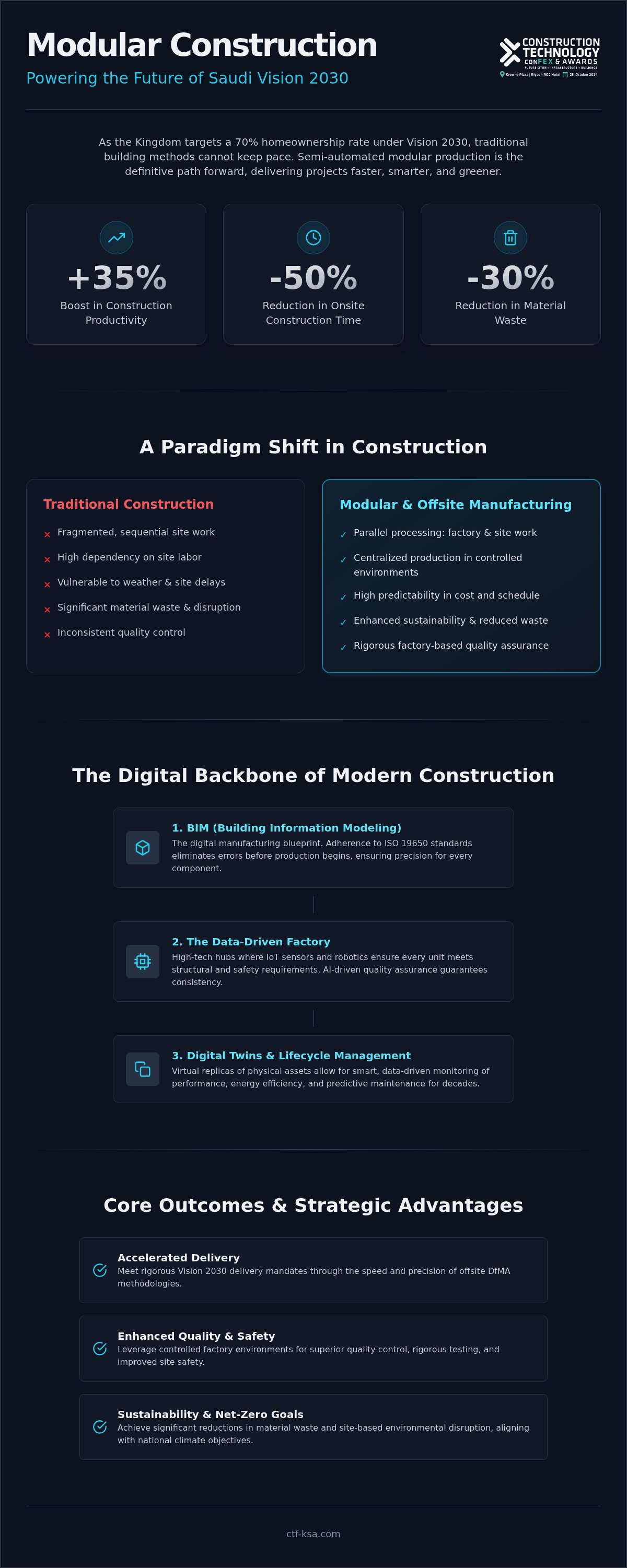
Did you know that semi-automated modular production is now projected to boost construction productivity by 35% across the Kingdom? It's clear that traditional building methods can't keep pace with the relentless timelines of Vision 2030. You've seen how high labor costs and mounting site waste make modular construction Saudi Arabia the only viable path forward for projects of this magnitude.
This guide explores how offsite technology serves as the essential engine for meeting 2026 giga-project milestones and stringent sustainability KPIs. You'll discover how to leverage these innovations to ensure strategic alignment with government-backed standards and accelerate your project delivery. We'll break down the rapid shift toward offsite manufacturing, the critical role of the Saudi Building Code, and how the industry's most influential stakeholders are securing their place at the forefront of this regional transformation. The future of the built environment is digital, sustainable, and fast. It's time to master the tools that make it possible.
Key Takeaways
- Master how DfMA and offsite methodologies provide the speed and precision necessary to satisfy the Kingdom's rigorous Vision 2030 delivery mandates.
- Explore the synergy between BIM and Digital Twins to eliminate manufacturing errors and optimize the lifecycle of prefabricated assets.
- Quantify the environmental impact of modular construction Saudi Arabia, including a 30% reduction in material waste compared to traditional building sites.
- Position your organization as a market leader by leveraging strategic partnerships and thought leadership to engage with key PIF decision-makers.
The Strategic Role of Modular Construction in Saudi Vision 2030
The Kingdom's construction landscape is moving beyond the limits of traditional brick-and-mortar. As Vision 2030 targets a 70% homeownership rate, implementing modular construction Saudi Arabia techniques has become a national imperative. Modular construction in the Saudi context encompasses offsite manufacturing, precast concrete systems, and sophisticated assembly techniques. These methods address the "faster, smarter, greener" mandate by centralizing production in controlled environments. DfMA represents the strategic precursor to modular success in 2026, ensuring every component is optimized for precision before reaching the site.
The shift from traditional methods to industrialised construction is palpable across the Kingdom's major developments. Developers are moving away from fragmented site work toward a cohesive manufacturing model that prioritizes volume and quality. This evolution allows for higher predictability in costs and project quality, positioning the industry as a tech-driven powerhouse. By 2026, the reliance on site-poured concrete will diminish in favor of precision-engineered components that arrive ready for immediate installation.
Accelerating Giga-Project Delivery Timelines
Speed is the new currency of the Saudi built environment. By utilizing parallel processing, where site preparation occurs simultaneously with factory production, stakeholders can reduce onsite construction time by up to 50%. This shift effectively mitigates chronic labor shortages by moving high-intensity work to specialized manufacturing facilities. It's a system built for momentum and scale.
Alignment with National Infrastructure Goals
PIF-backed giga-projects are no longer just building structures; they're setting global benchmarks for excellence. High-level modular adoption ensures that every development meets stringent sustainability and safety KPIs. For a deeper look at the transition, explore the Modern Methods of Construction Saudi Arabia roadmap. Integrating modular construction Saudi Arabia strategies allows developers to achieve:
- Rapid deployment of residential and hospitality assets.
- Enhanced quality control through rigorous factory testing.
- Significant reductions in site-based environmental disruption.
Digital Synergy: Integrating BIM and Digital Twins with Offsite Precision
Digital precision is the backbone of the modern build. In the world of modular construction Saudi Arabia, Building Information Modeling (BIM) isn't just a design tool; it's a manufacturing blueprint. By adhering to ISO 19650 standards, developers eliminate the margin for error before a single module is cast. This digital-first approach is highlighted in The Saudi Report 2023 as a core driver for giga-project success. It ensures that every prefabricated element fits perfectly within the broader infrastructure grid, preventing costly onsite adjustments.
Real-time visibility is non-negotiable. Project Management Information Systems (PMIS) now track offsite logistics with surgical accuracy, ensuring that every component arrives on-site exactly when needed. This prevents the bottlenecks that often plague traditional sites. To achieve this level of coordination, stakeholders must first master the Digital Transformation in Construction KSA. It's the essential prerequisite for true modularity and operational excellence.
The Data-Driven Factory Floor
Saudi modular factories are transforming into high-tech hubs. IoT sensors and robotics ensure that every unit meets REI60 fire resistance and structural integrity requirements. AI-driven quality assurance scans components in real-time, reducing rework and guaranteeing consistency across thousands of units. These factories aren't just assembly lines; they're centers of innovation where data dictates every weld and joint.
Lifecycle Management through Digital Construction
The value of a modular asset extends far beyond the handover. Digital Twins allow for smart asset management in residential campuses and luxury hotels. By leveraging DC Hub insights, operators monitor long-term facility performance and energy efficiency. This data-driven approach allows for predictive maintenance, ensuring that the prestige of the development is maintained for decades. Connect with the leaders driving these innovations when you attend the Kingdom’s flagship innovation platform.
Sustainability and Climate: Meeting Net-Zero Goals through Modularity
Sustainability isn't a secondary goal in the Kingdom; it's the absolute standard for the modern built environment. Adopting modular construction Saudi Arabia allows developers to bypass the inherent waste of traditional sites. Precise factory environments enable offsite manufacturing to save 30% more material by optimizing cuts and recycling scraps within a closed loop. This efficiency is vital for meeting the sustainability benchmarks outlined for Saudi construction and Vision 2030. By concentrating resources, we eliminate the heavy environmental footprint of constant onsite transport and heavy machinery idling.
Climatetech is now a core component of the modular assembly line. Electric machinery and solar-powered factories are replacing diesel-heavy traditional methods to align with the national goal of achieving net-zero emissions by 2060. Modular systems aren't just buildings; they're high-performance machines designed for a low-carbon future. They represent the most direct path to scaling green infrastructure without compromising on luxury or structural integrity.
Innovative Materials and Energy Efficiency
The next generation of precast units utilizes low-carbon concrete and recycled steel to lower the embodied carbon of every structure. These modules are specifically engineered for the harsh desert climate, incorporating advanced thermal insulation that reduces cooling demands by up to 40%. Key features of this eco-friendly approach include:
- Integration of high-performance glazing to minimize solar heat gain.
- Smart HVAC systems pre-installed for maximum operational efficiency.
- Utilization of sustainable, locally sourced finishing materials.
Circular Economy in the Built Environment
Modular systems offer a unique sustainability benefit: the ability to disassemble and reuse entire sections. This circular approach prevents demolition waste and extends the lifecycle of building materials indefinitely. To explore these methodologies further, review our guide on Sustainable Construction Solutions Saudi Arabia. It's a strategic shift that transforms buildings from static assets into flexible, reusable resources.
Leading the Transformation: High-Level Networking for Modular Success
Technical excellence is merely the entry fee for the Kingdom’s ambitious build-out. To dominate the 2026 giga-project pipeline, modular providers must move beyond simple manufacturing and establish definitive thought leadership. In the high-stakes arena of modular construction Saudi Arabia, your reputation as a visionary partner is what secures high-value contracts. CTF KSA serves as the definitive catalyst for these connections, having facilitated over 500 strategic meetings between technology disruptors and PIF-backed stakeholders. It's the prestigious platform where the industry's elite converge to shape the future of the built environment.
Success in this sector depends on proximity to power. As the Kingdom’s #1 ConTech and innovation platform, we provide the exclusive infrastructure for high-stakes networking. You don't just showcase a product; you influence the national agenda. Attend CTF KSA to connect directly with the decision-makers who are currently redefining global construction standards.
Winning the Giga-Project Market
Establishing authority requires a platform that commands respect. Speaking opportunities at our events allow modular leaders to present their case directly to an audience where 80% of attendees are clients and end users. This strategic exposure is why we maintain an 87% exhibitor retention rate. It's not just about visibility; it's about converting prestige into multi-year project partnerships and tangible business growth.
Building the Ecosystem: Collaboration over Competition
The scale of Vision 2030 demands a unified ecosystem. Curated roundtables at CTF KSA bring together developers, contractors, and modular specialists to solve integration challenges in real-time. For those seeking a comprehensive roadmap for engagement, the Construction Innovation Summit KSA provides the leadership insights necessary for strategic participation. By fostering collaboration over fragmented competition, we ensure the Kingdom remains the global epicenter of construction innovation.
Mastering the Modular Frontier
The industrialization of the built environment is no longer a future prospect; it's the current reality for every giga-project reaching maturity in 2026. You've seen how digital precision and offsite manufacturing allow stakeholders to bypass traditional bottlenecks while meeting ambitious net-zero targets. Mastering modular construction Saudi Arabia is the only way to remain competitive as the Kingdom's infrastructure goals scale to unprecedented heights.
Strategic success requires more than technical knowledge; it demands access to the institutional power driving these transformations. As a platform supported by PIF, CTF KSA provides the elite networking environment where 80% of attendees are high-level clients and end users. With over 500 facilitated meetings already connecting innovators to decision-makers, the opportunity for strategic partnering is unmatched. The momentum is building, and the window to influence the 2030 landscape is now.
Secure your delegate pass for CTF KSA 2026 and lead the modular revolution
Join the architects of the new Saudi era and secure your position at the forefront of global construction innovation.
Frequently Asked Questions
What are the main benefits of modular construction for Saudi giga-projects?
The primary advantages include a 50% reduction in onsite construction timelines and a projected 35% increase in productivity. By shifting work to controlled factory environments, modular construction Saudi Arabia allows for parallel processing where site preparation and building assembly happen at once. This method also reduces material waste by 30%, directly supporting the Kingdom's "faster, smarter, greener" delivery mandate for major national infrastructure.
Is modular construction recognized by Saudi building codes and Vision 2030 standards?
Yes, all modular systems must strictly comply with the Saudi Building Code (SBC) to ensure they meet national safety and durability requirements. These technologies are a central pillar of Vision 2030, specifically helping the Kingdom reach its 70% homeownership target. Major government-backed entities like the PIF actively support offsite manufacturing as the definitive solution for delivering large-scale projects on time and within budget.
How does modular construction improve site safety in the Kingdom?
Shifting high-intensity labor to offsite factories significantly reduces onsite hazards and improves overall worker wellbeing. By utilizing DfMA and controlled assembly, stakeholders minimize risks associated with working at heights and extreme weather conditions. This industrialized approach ensures a more predictable environment, allowing for rigorous safety monitoring and quality assurance that's often difficult to maintain on traditional, fragmented construction sites across the country.
Can modular construction be used for high-rise developments in Saudi Arabia?
Advanced modular systems are perfectly suited for vertical structures, utilizing high-strength steel frames and precast concrete modules. These technologies are already being integrated into giga-project planning to deliver luxury hospitality and residential towers with unprecedented speed. The use of modular construction Saudi Arabia ensures that complex high-rise developments benefit from the precision of offsite manufacturing and the structural integrity required for large-scale urban expansion.
How can technology providers showcase modular solutions to Saudi developers?
Technology providers can leverage CTF KSA, the Kingdom’s #1 ConTech platform, to present their innovations directly to senior decision-makers. With 80% of attendees being clients and end users, the event facilitates over 500 strategic 1:1 meetings to bridge the gap between sellers and buyers. Participating through sponsorship packages or exhibition stands allows innovators to build the thought leadership necessary to win major contracts within the ecosystem.