 DCTC KSA

- Blogs
- / KSA Construction Market: Build Partnerships and Industry Connections
A long contact list is not the same as a strong market network. Building a professional network in the KSA construction market means forming relevant relationships with people connected to your projects, from project owners and contractors to consultants and technology leaders. Focused industry events can create opportunities to meet and engage them.
For international companies, entering the market takes more than presenting a capability statement. It requires understanding who influences project requirements, building credibility before an opportunity arises, and keeping conversations relevant to each contact’s responsibilities. The quality of those connections matters more than the number of names in a directory.
This article explains how to identify valuable industry connections, make professional engagement purposeful, and turn conversations into lasting working relationships. It also explores how a targeted construction technology event can connect companies with professionals across Saudi Arabia’s built environment.
Key Takeaways
- Use local priorities to shape partnership conversations: according to the Saudi Housing Program, Saudi Arabia aims to raise home ownership among nationals to 70% by 2030.
- Choose industry events by the professionals and project stakeholders you want to meet, not by attendance alone.
- Build trust through respectful business etiquette, attentive listening, and clear communication that accounts for language preferences.
- Align your event participation with your goal, whether that is meeting contacts, sharing expertise, or presenting your company’s capabilities.
Networking with industry professionals
Strong industry relationships begin with understanding who shapes a project and what each professional needs. Prioritise relevant connections, shared goals, and consistent follow-through.
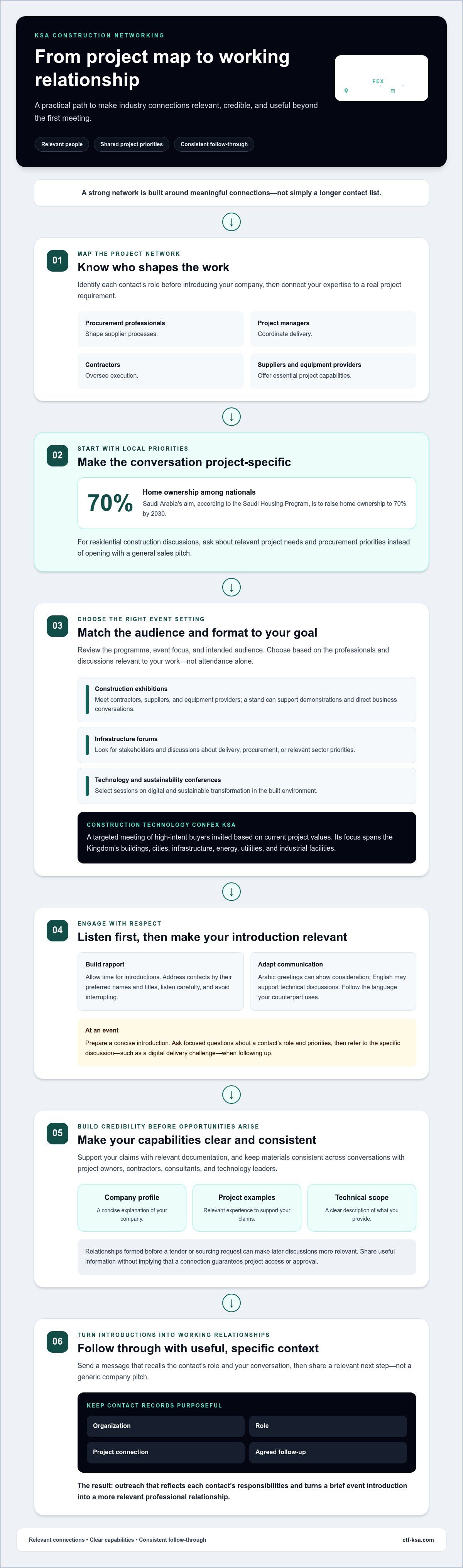
Map the project network
Construction decisions involve different people at different stages. Procurement professionals shape supplier processes, project managers coordinate delivery, and contractors oversee execution. Suppliers and equipment providers can offer essential project capabilities. Identify each contact’s role before introducing your company, then connect your expertise to a real project requirement.
Housing priorities provide useful context for these conversations. According to the Saudi Housing Program, Saudi Arabia aims to raise home ownership among nationals to 70% by 2030. For example, an international company discussing residential construction can ask contacts about relevant project needs and procurement priorities, rather than opening with a general sales pitch.
Construction Events and Trade Fairs
Focused construction events bring professionals from across the project ecosystem together. They can help international companies meet project owners, contractors, consultants, and technology leaders through conversations centred on current industry priorities.
Prepare a concise introduction that explains your company’s capabilities and the projects or challenges it supports. At an exhibition stand or conference session, ask focused questions about a contact’s role and priorities. Follow up by referring to the discussion, such as a digital delivery challenge or project requirement.
Business Customs and Networking Etiquette
In Saudi business settings, respectful introductions, attentive conversation, and relationship-building help establish professional rapport. Trust develops through how people communicate and follow through, not simply through an initial meeting.
Allow time for introductions before discussing a proposal, and listen carefully before presenting your capabilities. Address contacts by their preferred names and titles, keep materials clear, and avoid interrupting. Arabic greetings can demonstrate consideration, while English may support technical discussions; adapt to the language your counterpart uses.
Build credibility before opportunities arise
Credibility grows when your company explains its capabilities clearly and supports its claims with relevant documentation. Prepare a concise company profile, project examples, and a clear description of your technical scope. Keep these materials consistent across conversations with project owners, contractors, consultants, and technology leaders.
Relationships formed before a tender or sourcing request can make later discussions more relevant. For example, a contact who understands your expertise may help direct you to the right technical conversation. Share useful information without implying that a connection guarantees project access or approval.
Turn introductions into working relationships
Follow up with a message that recalls the contact’s role, your conversation, and a useful next step. If you discussed digital delivery with a project leader, send a concise capability summary relevant to that topic rather than a generic company pitch.
Track contacts by organization, role, project connection, and agreed follow-up. This keeps outreach purposeful and distinguishes an active project relationship from a brief event introduction. Building a professional network in the KSA construction market is about meaningful connections and mutual understanding, not simply a longer contact list.
Which construction industry events and trade fairs in Saudi Arabia are best for professional networking?
Choose an event based on the professionals and project discussions relevant to your goals. Construction Technology ConFeX KSA is a targeted meeting of high-intent buyers invited to attend based on current project values. Its focus is “One platform spanning the Kingdom’s buildings, cities, infrastructure, energy, utilities and industrial facilities.” Review the programme and audience to decide whether the event fits your priorities.
Match the event format to your objective
Start with the business outcome you want. If you’re looking for local contractor relationships, prioritise events where construction companies and project professionals meet. For supplier introductions, exhibitions can help you compare capabilities and discuss project needs directly. If your priority is sharing expertise, look for conferences with relevant technical sessions and speaking opportunities.
Review the published programme, event focus, and intended audience before deciding how to participate. Identify the themes that connect with your work, then prepare a short introduction and specific discussion points. For example, a company focused on digital engineering can frame conversations around project delivery needs rather than giving every contact the same general pitch.
Consider these Saudi event settings
- Construction exhibitions: Use exhibition floors to meet contractors, suppliers, and equipment providers. A stand can support direct demonstrations and focused business conversations.
- Infrastructure forums: Prioritise programmes that bring together project stakeholders and cover delivery, procurement, or sector priorities relevant to your capabilities.
- Technology and sustainability conferences: Choose sessions that address the built environment’s digital and sustainable transformation. These discussions can connect technology providers with industry leaders.
- Construction Technology ConFeX KSA: This event focuses on digital and sustainable transformation in Saudi Arabia’s built environment. Its conferences, networking sessions, and technical demonstrations create opportunities to engage with construction professionals around these themes.
Make attendance purposeful
Plan conversations around professional roles, not just organizations. A project owner, contractor, and technology leader may influence different project decisions. Set a clear goal for each discussion, such as understanding a requirement or agreeing on a relevant follow-up. Bring concise company information that supports that goal.
After the event, follow up with a note tied to the conversation. Mention the topic discussed and share only material relevant to that contact’s work. Construction Technology ConFeX KSA offers delegate passes for professionals seeking access to conference sessions, networking, and technical demonstrations.
How do Saudi business customs, etiquette, and Arabic language affect construction-sector networking?
In the Saudi construction market, communication style can shape how introductions develop into working relationships. International teams can show respect by preparing for formal introductions, listening carefully, and adapting their language to each meeting. An initial conversation with a contractor, for example, can start with roles and project context before moving to capabilities or commercial details.
Use respectful, relationship-focused communication
Professional etiquette begins with a courteous greeting and attentive conversation. Use the name and title a contact prefers, and allow time for introductions before discussing a proposal. When meeting a project owner or technology leader, clarify their responsibilities and priorities, then explain how your company’s capabilities may be relevant.
Conversation may include relationship-building before business details. Treat this as useful context, listen without interrupting, answer questions directly, and avoid pushing for an immediate decision. A project leader discussing delivery priorities may value a thoughtful exchange before reviewing a capability statement.
Choose language for the people in the room
Arabic is Saudi Arabia’s national language, and English is also used in international business settings. The working language can depend on the participants, project documents, and technical subject. Ask which language suits the discussion, then use it consistently. A clear greeting and precise technical terminology both help keep communication respectful and understandable.
For presentations, prepare concise materials in a language your audience can use comfortably. Keep technical terms consistent across slides, drawings, and follow-up notes. If a meeting includes Arabic- and English-speaking participants, pause after key points and invite questions. This helps ensure details such as project requirements and delivery scope are understood.
Read meeting cues and follow through
Professional meetings vary by organization and individual, so respond to the cues in the room. If a host offers refreshments, accept or decline politely and return attention to the discussion. If a contact suggests continuing the conversation later, agree on a clear next step rather than treating an informal exchange as a commitment.
After meeting a project owner, contractor, or consultant, send a brief follow-up that names the topic discussed and the agreed action. Share a relevant project profile if it supports the conversation. Keep the message courteous, avoid repeated pressure, and make the next step clear. Consistency between your introduction and written materials strengthens credibility.
Make cultural awareness practical
Before a meeting, confirm the agenda, participant roles, and preferred language. Bring a concise company profile and introduce your team clearly. These practical steps help international firms keep discussions with Saudi construction professionals focused, respectful, and useful, especially when building a professional network in the KSA construction market at premier industry gatherings like the Construction Technology ConFeX KSA.
Construction Technology ConFeX KSA: Sponsorship Packages
Construction Technology ConFeX KSA connects construction and project delivery with next-generation technology. Its targeted, high-intent audience makes it a relevant setting for companies seeking focused conversations across the built environment. Consider the event when you are ready to move beyond individual introductions and engage with industry professionals around shared priorities.
Sponsorship Packages and Exhibition Stands give companies ways to present their capabilities and build visibility at the event. Speaking Opportunities let industry experts share relevant insights, while Delegate Passes provide access to conference sessions, networking, and technical demonstrations. Choose the participation option that best supports your objectives.
Use the event’s “Sponsor Now,” “Attend Now,” or “Register Now” option to take the next step that matches your participation goals.
Turn connections into lasting momentum
Building a professional network in the KSA construction market takes more than meeting the right people. The next step is turning promising introductions into focused conversations, shared understanding, and relevant follow-up. Keep your purpose clear: establish a project dialogue, deepen a relationship, or make your expertise visible to professionals shaping the work.
Choose an event role that supports that objective. Construction Technology ConFex KSA offers Sponsorship Packages, Delegate Passes, and Speaking Opportunities. Each provides a different way to participate and engage with the construction community. Align your choice with the contribution you want to make and the professionals you hope to reach.
Before your next industry engagement, define the message you want contacts to remember and the useful next step you can offer. Consistent, thoughtful participation can help your company build recognition and develop stronger professional relationships over time.
Move forward with purpose, and let each new conversation create space for a stronger professional relationship.
Frequently Asked Questions
Which Saudi construction associations, councils, and professional groups should industry professionals join?
Start with organizations whose members align with your role and projects, including the Saudi Contractors Authority and the Construction and Real Estate Sector Skills Council. Contractors can focus on sector discussions and relevant professional gatherings, while specialists can prioritize groups connected to their technical discipline. Contribute expertise, attend public industry sessions, and build familiarity with the organizations’ priorities before seeking deeper participation.
How can professionals build relationships with Saudi construction developers, contractors, consultants, and government entities?
Approach each organization with a clear, relevant contribution. For a project owner, prepare a concise capability brief tied to its project priorities; for a consultant, focus on technical interfaces and coordination. Use formal channels when engaging public-sector organizations, and keep communication factual. After a meeting, send a written recap of agreed actions and responsibilities.
What are the key construction companies and decision-makers to connect with in Saudi Arabia?
Relevant organizations include NEOM, Red Sea Global, Roshn, AlUla Development Co, New Murabba, Group Amana, Nesma & Partners, and Al Bawani. The right contacts depend on your capability and project scope. Map roles such as project owners, development leaders, procurement professionals, engineering directors, and digital delivery leads. A focused account map helps you address the person responsible for the specific decision.
What are the best ways to network with construction professionals involved in Vision 2030 and major giga-projects?
Connect your expertise to project delivery priorities, then take part in relevant industry forums and professional discussions. For example, a digital engineering provider can prepare a concise case study on BIM coordination, while a contractor can explain its approach to project interfaces. Clarify each stakeholder’s role and current challenge so your follow-up is specific, without implying that a meeting guarantees project access.
How can foreign professionals build trusted local partnerships and avoid common networking risks in Saudi Arabia?
Build trust through clear scope, consistent communication, and documented follow-through. Before exploring a partnership, establish each party’s decision authority, responsibilities, technical contribution, and commercial assumptions in writing. Treat introductions as the start of a discussion, not proof of approval or a contract opportunity. Protect confidential project information, avoid overstating local experience, and ensure every follow-up reflects what participants actually agreed.