
 DCTC KSA

- Blogs
- / How to Network with Keynote Speakers at Events and Online
A keynote session can open a door, but a relevant conversation is what turns attendance into a professional connection. Learning how to network with keynote speakers starts with finding a natural point of contact before, during or after an event, then opening with a specific observation or shared interest. A warm introduction can help, but a concise, respectful direct approach can work too.
It’s understandable to hesitate when a speaker is busy or surrounded by attendees. The goal isn’t to deliver a perfect pitch; it’s to make a genuine connection around an idea that matters to both of you. This guide explains how to meet speakers at events in Saudi Arabia, find introductions through your professional network, start a focused conversation and follow up online. You’ll also learn how to build on a keynote’s ideas rather than letting the opportunity pass when the session ends.
Key Takeaways
- Use event networking moments to approach a speaker with a clear reason for connecting, not a generic introduction.
- Ask colleagues and professional contacts for relevant introductions or recommendations that can open a conversation naturally.
- Build your opening around a specific idea from the keynote or a shared professional interest, then give the speaker room to respond.
- Make direct online outreach concise and relevant, with a thoughtful follow-up that keeps the exchange professional.
Keynote speakers and networking sessions
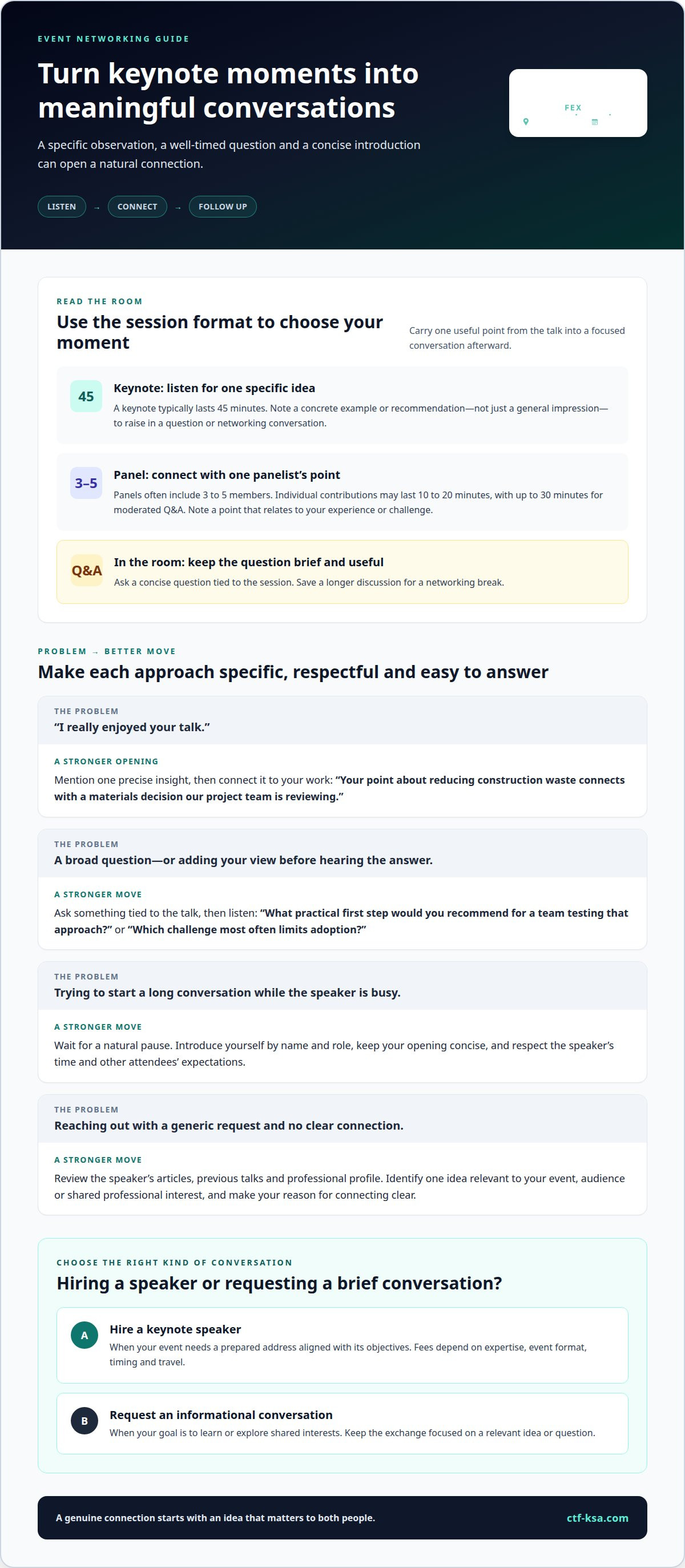
A keynote address gives a conference its central message, while the opening keynote introduces the event’s theme. Speakers may connect an idea such as artificial intelligence or sustainable construction to practical challenges attendees face. A keynote speech typically lasts 45 minutes, creating a focused starting point for questions and follow-up conversations. Listen for a specific example or recommendation you can raise afterward, rather than offering only general praise.
Use the session format to choose when and how to approach a speaker. A panel often includes three to five members, with individual contributions lasting 10 to 20 minutes and up to 30 minutes for moderated questions and answers. Note the panelist’s point and connect it to a relevant experience or challenge. If the session includes audience questions, keep yours brief and useful to the room; save a longer discussion for a networking break.
Should you hire a keynote speaker or request an informational meeting, and what are the costs? Hire a speaker when your event needs a prepared address aligned with its objectives; request a brief informational conversation when your goal is to learn or explore shared interests. Speaker fees depend on expertise, event format, timing and travel, so the event scope shapes the cost.
Organizers can make a keynote more useful by matching the speaker’s expertise to the conference theme and audience. Decide whether the session should educate, motivate or introduce a change effort, then select a speaker whose experience supports that purpose. For example, an event focused on digital construction can frame a keynote around technology adoption and its effect on project teams. A clear link between topic and audience gives attendees a stronger basis for discussion.
Promotion should make the session’s value clear before attendees arrive. Feature the keynote’s name and topic, and explain how the talk connects to the conference theme. For technical and engineering organizations, collaborating with industry specialists such as BCM Public Relations can help amplify speaker visibility and communicate complex innovations effectively. Set out what attendees can expect to take away, such as a fresh perspective on industry transformation or practical ideas for collaboration. Plan session timing and networking together so attendees can carry a useful question from the speech into a focused conversation afterward.
Using personal and professional networks for speaker recommendations
Colleagues, associates and friends can point you to speakers whose work suits your event. A focused request for recommendations turns existing professional relationships into useful introductions.
Researching Speakers Before Contact
Speaker research means reviewing a person’s expertise, public work and audience fit before reaching out. A specific, informed approach is more relevant than a generic request. Review the speaker’s articles, previous talks and professional profile, then note one idea that connects with your event. For example, a corporate audience interested in digital construction may value a speaker’s practical experience with technology adoption. This preparation gives you a clear reason to connect.
Ask your professional network for recommendations based on a defined topic, audience and event purpose. A colleague may suggest a speaker they heard discuss leadership, while an industry associate may know an expert whose research suits a technical conference. Ask what makes each person a good fit, such as subject knowledge, audience engagement or a memorable presentation. Compile the names and compare their strengths with your event’s goals. Personal references can help identify speakers with a track record, while a direct introduction can give your first message useful context.
Encouraging Collaboration and Connections
Collaboration means using shared professional relationships to make relevant introductions and exchange expertise. A speaker recommendation can bring event organizers, colleagues and potential contributors together around a common objective. Ask a trusted contact why a speaker might suit the audience, then whether an introduction would be appropriate. This gives a conversation context without treating the recommendation as an endorsement of every aspect of the speaker’s work.
Keep the exchange reciprocal. Share the event’s purpose and the audience’s interests, then give your contact room to suggest another expert or perspective. For example, a colleague recommending a sustainability speaker may connect you with a project leader who can add practical insight. An interview can also help you assess how a speaker explains ideas to a corporate audience; explore these speaker interviews as part of your research. A focused network can turn inspiration into a memorable event and meaningful professional connections.
Conversation starters based on shared interests
A useful conversation starts with one precise connection between the keynote and your work. Mention a specific insight, then explain how it relates to a project, challenge or shared industry interest. For example: “Your point about reducing construction waste connects with a materials decision our project team is reviewing.” This gives the speaker a clear subject to respond to and moves the exchange beyond generic praise.
After the talk, ask a question that invites the speaker to expand on an idea. You could ask, “What practical first step would you recommend for a team testing that approach?” or “Which challenge most often limits adoption?” Keep the question tied to the speech, and listen to the answer before adding your own perspective.
At a closing keynote, connect your question to the event’s main theme or a takeaway you plan to apply. For example, ask how a recommendation might work for a company with limited implementation resources. This shows you listened and makes the exchange more relevant than asking for a broad career summary. A focused question can also create a natural opening for a brief introduction.
Good networking etiquette respects the speaker’s time and other attendees’ expectations. Wait for a natural pause, introduce yourself by name and role, and keep your opening concise. If a queue forms, avoid monopolizing the conversation; thank the speaker and let the next person connect. Don’t interrupt another discussion or turn a first meeting into an extended pitch.
Build on shared interests rather than forcing a request. If the speaker discusses workforce skills and you work on team development, share one relevant observation and ask how they see the issue evolving. If the exchange feels useful, ask whether they’d be open to continuing the conversation online. A short, thoughtful follow-up can refer to that specific exchange and keep the connection professional and memorable. The aim is not to secure an immediate commitment, but to begin a dialogue grounded in genuine insight.
Contacting speakers directly
At an event, introduce yourself briefly, refer to one point from the presentation and ask a focused question. For example, connect a speaker’s insight about construction technology with a challenge your team is addressing. This gives the exchange a clear purpose and respects the speaker’s time. If you’re considering how to network with keynote speakers, start by making a specific connection to their ideas.
For online contact, use a professional channel where the speaker shares work or accepts inquiries. Keep your first message concise: identify yourself, name the talk or idea that prompted you to reach out, and explain the connection. “Your presentation on digital project delivery raised a question about team adoption. I’m exploring that issue in my work and would value your perspective” is more effective than a generic request to connect.
Make your message specific to the speaker’s expertise and vision. Before sending it, remove broad praise and requests that would require substantial unpaid work. If you’re inviting a response, ask one clear question, such as how leaders can make a new process easier for project teams to adopt. Knowing how to network with keynote speakers also means making it easy for them to understand why you’re reaching out and what kind of reply you hope to receive.
After an event conversation, follow up by referring to the exact subject you discussed. For example, thank the speaker for their point about implementation barriers, then share a brief update on how it relates to your work. Avoid sending repeated messages if they don’t reply. A respectful follow-up keeps the exchange professional and leaves room for future contact without treating a connection request as an obligation.
For a first introduction, state your name and role, mention the relevant talk, then pause for the speaker’s response. If the setting is busy, ask whether they’d prefer to continue the conversation online. This simple approach works at a conference or in a direct message because it is clear, courteous and focused on a shared topic.
Construction Technology ConFeX KSA
Construction Technology ConFeX KSA gives professionals in Saudi Arabia a focused setting to continue conversations about the built environment’s digital and sustainable transformation. If you want to meet keynote speakers and industry leaders in person, a Delegate Pass provides access to the event’s conferences and networking sessions. Use the ideas from this guide to arrive with a clear introduction and a relevant question.
If your organization wants a more visible role, consider whether Sponsorship Packages or Exhibition Stands align with its objectives. Professionals interested in sharing expertise can explore Speaking Opportunities. Each route offers a distinct way to take part in conversations about construction technology and industry change.
Choose the participation route that fits your goal, whether that is learning, presenting expertise or building connections around your organization’s work. Contact Construction Technology ConFeX KSA to discuss the next step.
Turn a conversation into your next opportunity
A professional connection gains value when you continue the exchange with purpose. After meeting a speaker, identify one idea you want to explore and consider how it connects to your work in Saudi Arabia’s built environment. Knowing how to network with keynote speakers means treating each interaction as the start of a thoughtful professional dialogue, not simply a chance to collect contacts.
Choose a participation route that supports your next goal. Delegate Passes provide access to the event, Speaking Opportunities let professionals share their expertise, and Sponsorship Packages support organizations seeking an active role. Each offers a distinct way to engage with the industry community.
Take the next step with a clear intention. Bring your perspective, stay open to useful conversations, and let a shared interest create momentum for future collaboration.
Frequently Asked Questions
How to write a networking email to a keynote speaker?
Write a short, specific email that makes your reason for contacting the speaker clear. Use a subject line naming the event or topic, introduce yourself and explain why their work relates to your role. Mention one particular idea from their talk or publication, then ask one focused question or request a brief conversation. Close courteously, add your professional signature and send one concise follow-up if needed.
How to build a genuine professional relationship with a keynote speaker?
Build the relationship through relevant, sustained exchanges rather than an immediate request for access or endorsement. Follow up with a specific reflection on their work, share a useful resource or introduction when appropriate, and keep future messages purposeful. At Construction Technology ConFeX KSA 2027, invited attendees can use Delegate Passes to join sessions and networking, creating a relevant setting for thoughtful conversations with speakers.